Time

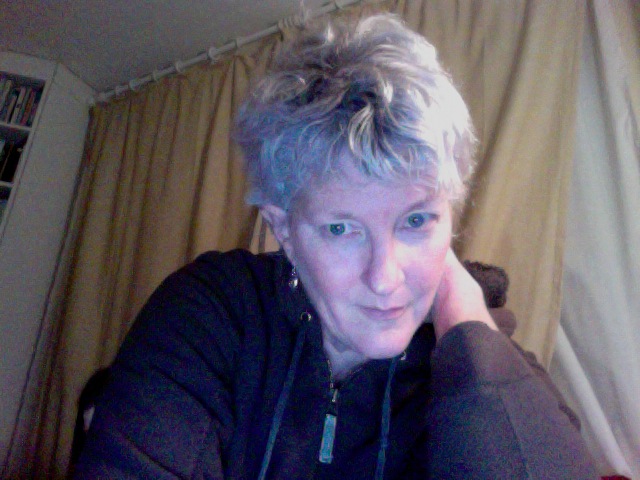
Photo on 2012-12-10 at 19.08

Most of my friends aren’t writers. I know and am fond of a great many writers, but I live in a small market town. My best mates do all kinds of things. We do the same things, too. Most of us go to my church or live on my street or our kids go to the same school in Bath. And they are, frankly, better at all the things we do the same. I’ve been trying to paint my hall for months – one of my mates has almost totally renovated her house in that time. All the mums at school keep saying, ‘Are you all ready for Christmas?’ The answer is no, not at all. Even though I’ve put all my church commitments in my diary, sometimes I forget that I’m meant to be reading or doing something else for the parish. I’m a trial to my great mates, the ushers at the Sunday morning Mass.

I know that they often wonder why I’m so…rubbish.

It’s the reading and writing, of course. And they forget.

Sometimes they say, ‘I don’t know when you do it all.’ And no, they don’t. Because they don’t understand. The writing…and the reading (which takes even more time) doesn’t go around the other elements of my life, like other work would. The reading and writing are the centre of my life. I am, mostly, made up of text. It is how I interact with the world, it is my primary essence. But that’s invisible to my friends. They may notice that there are piles of books everywhere in my house (as well as occupying the whole of one room and three other walls) but they don’t see me reading. They don’t see me writing.

My family knows my dirty secret. My daughter always used to draw me with a book in my hands. My husband calls up the stairs, ‘Mimi! We have to GO. Stop READING!’

It’s not my leisure time. It’s my life. And no, my tree isn’t up, thanks for asking.

Current ms; Hospital High, Blazing Heart

On Stretching ‘Till It Hurts

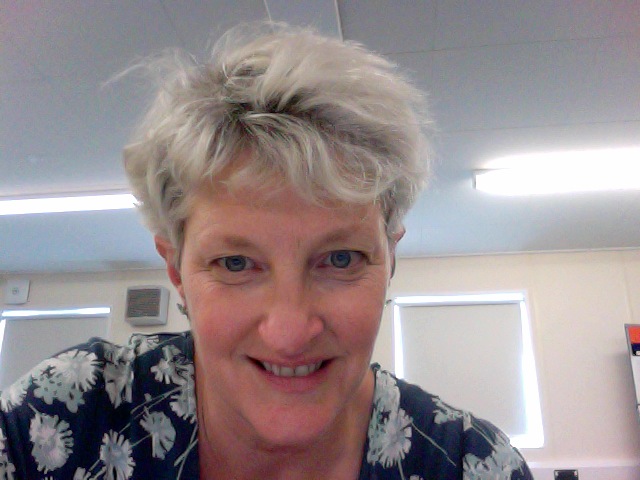
Photo on 2012-12-04 at 11.48 #3

I like my hair white. God is making my hair white, but he’s too slow. My hairdresser tells me it’s too dangerous and she won’t help me. And she’s right. I regularly destroy the ends of my hair and have to cut them off. And I often burn my scalp, bleaching my hair. I bleached it for two four-hour sessions yesterday and destroyed the ends. (I cut them off this morning.) And it’s still not really white – there’s a bit of yellow left in places. I’ll need to do more purple shampoos before it goes the colour I like.

On the other hand, it IS utterly fabulous.

My daughter, aged 10, is an ambitious dancer. She likes to see The Royal Ballet at Covent Garden (we get cheap seats and book the train months ahead of time). She fully expects to be dancing that well in ten years’ time (although she really is interested in becoming a choreographer). She’s just started training at a Russian Ballet School in Bristol, as well as at our local dance school. The Russian Ballet ask for a great deal more extension than my daughter has, and she’s been stretching assiduously. One day, in P.E. at school, she pulled an adductor muscle in her right leg. She’s having physio on it now, and off dance for the rest of the year.

On the other hand, her ballet has really improved.

Sophie has been in talks with a publisher I very much like, about Hospital High. They’d like me to make it more fictional than memoir, for me to ‘base it’ on my life experiences, but not conform to them. They’d like more about my relationships and about the 1970s setting. It’s a stretch. I might hurt it if I try to do that to it.

But on the other hand, it could be absolutely amazing.

To be amazing, you have to risk. To get better at something is to leave the way you’ve done it before completely behind. You don’t know it will work: you might lose, you might get hurt. But that’s art: being injured is almost guaranteed in ballet. Failing, regularly, is almost guaranteed in writing. You can live in the safety of what you know and do what you always do, I suppose. But it doesn’t sound much like living to me.

Current Manuscripts: Hospital High, Blazing Heart


Chaos and Order in the Writing Life

I meant to write this Thursday. I meant to have my hair done this morning. My husband didn’t really want to run to the Post Office to tax his car before giving two wine tastings in two separate cities (both with flood warnings). I didn’t really want to miss my daughter’s Taster Day reception at the school we are hoping she’ll attend next year, but I mis-read the time and scheduled teaching, instead. Oh, and the house looks like we’ve been burgled.

Chaos.

I can’t write when things are this messy and chaotic.

But they get this way, when I’ve been writing.

When things are going well with my writing, I don’t really notice that I tracked in half a ton of twigs, rosemary needles and dead leaves when I go out to garden and think about what happens next in my latest book. I don’t care that I have forgotten all the paperwork to do with my daughter’s school activities. I’m not bothered about dirty dishes or the fact that we still haven’t started the decorating (and the walls look horrid). I don’t answer my phone calls and I put emails about things I should do to one side, to think about ‘later’. But then, one day, I go to write and I am noticing it all. I think to myself, ‘Really! Why is this house so horrible? I can’t work in an environment like this! I can’t deal with all these people, phoning me, wanting me to do things, asking me questions!’

I get quite shirty about it.

But it was my fault (writing too early and then too tired to cook at dinner time) that there are big pizza boxes on the kitchen counters. It was me that left all my teaching books scattered on the dining room table (getting an hour or so in on the manuscript before my daughter came home). It was me that didn’t care about filing my class registers. Now it’s time to get out the shovel and clean the place, and spend a few hours on admin, so that my writer self can get back to work…and mess it all up again.

She’s horridly selfish. But I love her.

Timing is Everything

ImageI was watching the football (soccer) highlights programme, Match of the Day, on Sunday morning. It was the Arsenal v Queens Park Rangers game and I was struck by a wonderful save by Rangers’ goalkeeper Julio Cesar. It was a frantic goalmouth scramble…three or four Arsenal players and two or three Rangers. The ball was bouncing around like a popcorn kernel in a hot pan.

If Cesar had gone for the ball, he could have easily missed it. But he didn’t. He waited. At last someone’s boot got a clean poke at the ball; it sailed free towards the goal. Cesar plucked it from the air easily and gracefully – as if he was alone at the goal, as if nothing was distracting him.

It reminded me of what I’ve been reading, a non-fiction book by Graham Greene about his time with Panamanian General Omar Torrijos. In it, Greene is attempting to write a novel with the working title of On The Way Back. On Sunday morning, I had just read a little about Greene working for two months in London to write two pages.

Greene never did write On The Way Back. But while he was trying, he didn’t think that he had lost his ability to write. He didn’t force it. He didn’t panic. He didn’t immediately try and write something else. Just like Cesar, he waited with confidence. His next novel was The Human Factor.

Timing seems to be about confidence, about knowing what you can do and being content to wait for the right time to do it. Knowing what you can do also means knowing what you can’t do – Greene realised that, for him, using real people as characters was too limiting. He wouldn’t do it again. Cesar didn’t rely on a pacy dive.

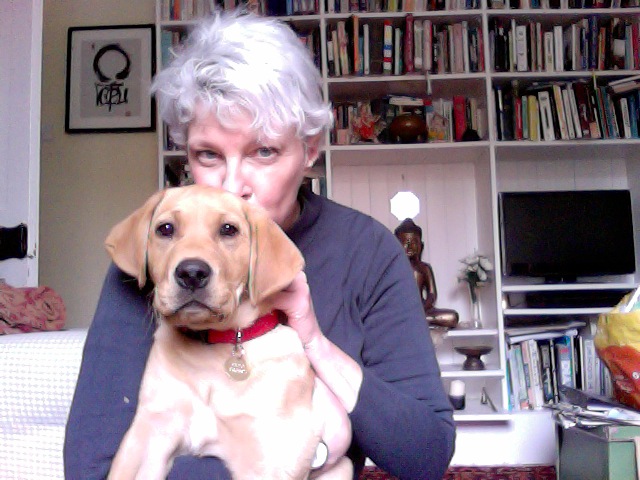
Currently, I have two halves of a novel and I’m not sure how I’ll make them into a whole. I’m taking a lot of long walks to think about it (in this picture,  I’ve just come back from a tramp in the rain around Willsbridge Mill with my ten year old daughter and eight month old labrador puppy). When I’m ready, I’ll pounce.

Manuscript: To Hide Her Blazing Heart

Word Count: 73, 419

Your 10K

Image


Stop me if you’ve heard this before…

No, don’t stop me. I need to get in my 10,000 hours of blogging. Malcolm Gladwell, in his book Outliers, makes a convincing case that one of the key precursors to human success is 10,000 hours of practice. That’s the difference between a grade one and orchestral violinist – 10,000 hours of practice.

But every new task also needs that practice time. I can write; I am lucky enough to be able to write a wide variety of texts. But every new novel also needs, if not 10,000 hours, an awful lot of them. You can only find out how to write a novel by writing it. There’s no short cut. 

My latest revision is coming along beautifully. At last I’m truly happy with the narrative voice, which has been bothering me for two years. I think I’ve done enough practice now to do the real thing.

Word count: 5557

http://www.gladwell.com/


See you in the sky

I’m happy. I’m happy because the Vice Chancellor has just come in to see my Creative Enterprise students’ work. I’m happy because I’ve spent all week in this room, talking to my students in their viva voce exams.

It’s inspiring.

It’s inspiring to hear all their new ideas. It’s inspiring to hear them talk about their ethos and morality and their own sense of aesthetic. And it’s simply lovely seeing young people succeed at something they put their hearts and souls into. When I get out of this room every afternoon, I feel like I could fly.

So, I thought I’d share them here, and let you be inspired, too.

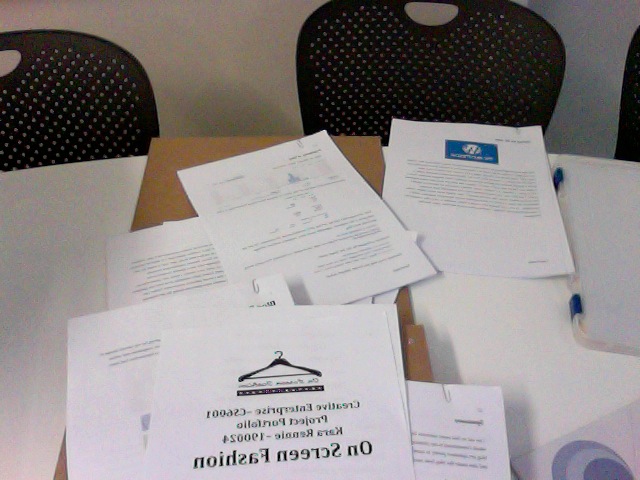
Here’s Kara Rennie’s amazing blog about costume design: www.onscreenfashion.com

Here’s Nina Camacho’s inspiring upcycling blog: www.sohouseproud.com 

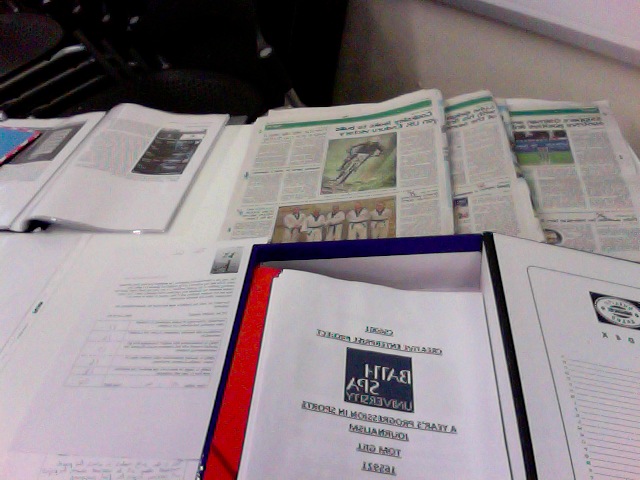
Here’s Tom Gill’s sports journalism: www.beyondthedugout.co.uk

and Eve Beddow’s work to raise awareness and funds for Lupus UK: http://kalauk.org/  

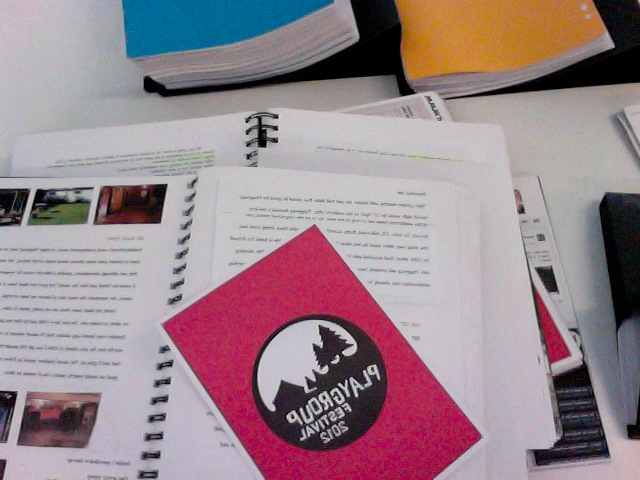
and Claire Holmes’ amazing event: www.playgroupfestival.com

I wish I could show you more…you’re missing out on some wonderful people and amazing projects. And what it does for me is amazing, too. I just want to run out of here and make things; make whole worlds, write and write and write. There are points, during the year, when I wonder why I do this work. And then I get to this week, and I know. My spirits soar and I just take off into the sky.

Some of these students were nothing special. Some of them made marks in the 50s and 60s and tootled along the university system. And then they get just a little encouragement to try something of their own and they…well they fly! I’m giving out a 90 this year. I’m giving out two other marks above 85%. And for a university culture that calls a 70% an A, that’s pretty darn mega.

What does that mean for you? Two things, I think. Listen to the young people around you, firstly, and try and hear what they are doing. Sometimes, with a little tiny bit of help, they can do so much more. And also, notice what happens when you get some support yourself.

I’ll see you up in the air.

How We Talk About Ourselves

I just saw a post from one of my home-town buddies. She was an amazing songwriter in the 80s and 90s and someone had written a retrospective of her career, because she was the judge of a songwriting competition. She posted the retrospective on facebook…and then ended up talking at length about how and why she’d lost the same competition, 25 years ago.

I mean, here was this great write up but she just couldn’t be positive about it. That’s what my husband says I do – ‘you talk yourself down’ he says. Maybe that’s just the Midwestern girl in me. Garrison Keillor once said that the proper way for a Midwestern man to announce to his friends that he just bought a fishing boat is to sigh and say, ‘Well, I guess I’d better start looking for a trailer.’

The whole issue of writerly promotion is fraught with difficulty and peril. My colleagues and I have been emailing about it all day. Truman Capote said, ‘A boy must peddle his books,’ but I’m not sure we all want to, or in fact can, peddle. I can sell anything to anybody, but I get terribly embarrassed talking about my own work. And because I’m embarrassed, I’m not all that great at it, I don’t think.

And the whole Publishing industry is in such flux… I’m not sure anybody knows anything right now. I don’t know if pretending you’re the greatest thing is all that useful to people worrying about their jobs.

I think I’ll stick to writing the stuff, and see where that gets me. Oh, and if you’re at a literary function, you’ll find me by the onion dip, if you want to talk. I’ll be looking all confident and happy, but don’t let that fool you…

Robbing Time

I’m working all May on marking. It’s Thursday, my movie day, and I haven’t even showered yet (it’s nearly noon) because I’ve been marking flat out since seven am. I’m marking, sending reminders for students to put their work up on the virtual learning environment, making little voice recordings of feedback, and coaching staff and students on upcoming assessments. I’m also dealing with the inevitable student complaints and trying to make sure that I’ve been fair, they’ve been fair and that nobody in my care will miss graduating because I didn’t work hard enough and quick enough.

If I work all of May and get my marking done, I’ll be able to write all of June and July. That’s right. I’ll spend every day with my heroine, as she remembers all the events of her past and makes the decisions for her people’s future. And that means, I’ll finish my current book and Sophie will have yet another project to send out to editors for me.

I’m robbing myself of time now, so that I can have more in the future. I’m investing time now, so that I can draw it out again then.

And isn’t that what writing is, really, anyway? Don’t we spend our lives, scribbling away, so that our voices and ideas live on? My books go places I’ve never been, meet people I’ve never met. When I’m dead, they might still be read. Some dusty shelf will be cleared and someone will pick it up and open the page and…I’ll be getting back some of the time I invested in its pages…

Knowing Your Breed

I’ve just been for a walk with Foyle, our 3 month old Labrador Puppy. It was our first walk to the other side of the river, where we met a lovely West Highland Terrier named Sam. He and Foyle were playing happily and Sam’s owner and I were chatting when another pair of Westies arrived and were let off the lead to join the game. Then another arrived and its owner smiled and undid the lead on its leash. There was my golden lab puppy, suddenly surrounded by a sea of white West Highland Terriers. One of the Westies hated puppies, and though Foyle laid down and showed his tummy, it kept lunging at him until he cowered at my legs. I actually had to lift Foyle away from his tiny little teeth.

As we walked away, waving to the nice doggies with the nice owners (and inwardly cursing the nasty one), Foyle saw two labradors on the other side of the river and heaved a tremendous sigh. He’d spent Monday with his mother, grandmother and two siblings and he clearly missed hanging out with his own breed.

Knowing your own breed is important for writers, too. It’s important to know who you are and how that relates to your writing. Not so much because it helps your writing process, but because it helps you, as a writer, to establish yourself, to talk about your work intelligently and to communicate the worth of what you are writing to other people.

Even after seven books, I’m still not good at this. I’m still not sure I’ve found my breed…and I’m not the only one. I was talking to a mate the other day – another successful writer. She was saying that she doesn’t frame the discourse of her work properly; that she thinks she misses out on things because she doesn’t talk about her work in a way that allows other people to see who she is and where she fits.

I want to know, like Foyle, when I’ve been bitten because I’m playing with the wrong bunch. I want to know what I’m going to look like, when I grow up. I want to know my breed.

Forget Everything


It’s a good friend’s birthday on Wednesday. Another good friend has promised to text me Tuesday, to remind me.

She knows what it’s like this time of year for me. I’m going to be marking hundreds of thousands of words. I’m writing a chapter for an academic text, still writing my new book, and organising a symposium on narrative voice in historical and fantasy fiction. And have a puppy and a ten year old and my wine-obsessed husband and elderly house, etc… I really won’t be human again, until July.

And I’ll forget lots and lots of stuff.

But that’s okay. As a writer, you learn that forgetting is an important part of how your mind works. You can try and write down every idea that comes to you and then mine your notebooks for ideas…but really, what happens is that you remember the best one and go searching for it in the welter of stupid ideas you have completely forgotten (‘children’s book about angry armadillo’, ‘the time the crow stole my underwear’, ‘what happened when Rocky took mushrooms’). The good ideas don’t go away. They knock on the door of your memory, slide under it into your consciousness, wait until you are driving or otherwise occupied and come and nestle in your frontal cortex.

A new colleague told me about a puppy who got stuck coming in through a catflap. He arrived in the living room, wearing the entire door panel like a skirt. She said she wished she’d taken a photo, as if it was a personally failing on her part that she hadn’t immediately reached for a camera. But as she described the moment, I could tell that she had kept that memory safe; she’d polished it and taken it out and looked at it several times. The dog has been dead two years, but the puppy is still with her.

We remember the important things. I’ll remember how much I love Sue; the way she laughs, the way her eyes crinkle up when she’s about to do something naughty…even if I do mess up and forget to buy a card for Wednesday. And I’ll remember the important ideas for my work. Even if I do forget to brush my teeth before a lecture…