
I teach here on Wednesdays.
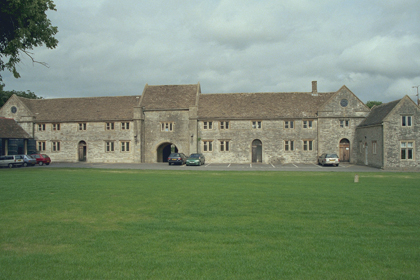 I teach here on Tuesdays.
And in between, my commute looks a bit like this:
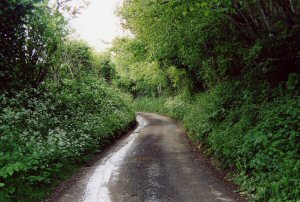
I’m a down-to-earth girl, but I do love beauty…in fact, I think I need it. When I think about the places I’ve lived and how much I’ve written while I was there, there is definitely a correlation between how gorgeous a place was and how much good writing I did while I was in that place. For me, that means countryside where I can observe wildlife within a short walk, and lovely drives. But for other writers that stimulation is wholly urban, and their aesthetic of what is beautiful and worthwhile to observe might not be so limited by prettiness as my own.
I also know that when the house is a complete tip I find it difficult to write. Not because I want to jump up and clean it (I never have such an impulse), but because it jangles my writing nerves. But other writers might need to escape the suburban neatness of their homes for a shed or an office, where the disorder gets their writing nerves jangling.
Writing’s relationship with order is complex.
The first need humans satisfy; after food and drink and shelter is story. The need for narrative is so basic within us that it often comes before sex. Why are we so addicted to narrative? Well, because we don’t forget as quickly as other species, and we are very efficient at picking up stimuli. If we don’t have a way to make sense of our world, we quickly become unable to function. Narrative is our way of imposing…or perhaps revealing…order in a chaotic world. It’s not just a way of remembering things, it’s also a way of forgetting; of deciding what we will not record and notice, out of the vast amount of phenomena that comes to our brains.
I hate housework. But I hate trying to write in chaos even more. So guess what I’m going to do…right after I finish this chapter…
For more information on narrative’s function in human psychology, you might want to start here, with Lewis Mehi-Madrona’s wonderful article.
 This is
  My Glamorous Literary Life