What’s Your Book About???

I ask my MA in Creative Writing students to come up with an ‘elevator pitch’ for their novels. ‘Tell us, in a few words,’ I say, ‘what your book is about.’ The problem is, of course, that a lot of them don’t know.

They might know they don’t know or they might think they know. But they really don’t. You don’t know what a book is about until you’ve written the first draft. And sometimes you don’t know even after it’s been published.

Take the amazing story my PhD student, Louise Johncox, is writing about her family’s teashop. Her family come from Poschiavo, in Switzerland (click here for a live web cam of the village), and have been patisserie chefs for literally hundreds of years. For the last one hundred years, they’ve run teashops in Britain, where they’ve made cakes, pies and their own chocolates. Louise’s generation did not continue the family tradition. It  all ended with Louise and her siblings. When she started to write her book, she thought that was the story. But the real story was about conserving the family recipes, many of which were only in her ailing father’s mind, and about coming to terms with the inevitable loss of her handsome, talented, dynamic, larger-than-life father in the only way journalist Louise could…by writing him into immortality.

So this week, I’ve discovered what Hospital High is really about. It was obvious, actually. I’m surprised I didn’t see it in the first place. I think I was just too close to the story to notice that it needed to be explained.

I wanted to be a singer when I was younger. It was everything to me. And I was good. When I died in the car accident, one aspect of me, the singer, never came back. But I learned to sing with paper and pen, instead. Obvious, really, especially when you consider that for the majority of the years covered in the memoir I couldn’t speak at all, but could only write in order to communicate. But I managed to overlook that element. I left it out altogether.

Now, I’m charging ahead on the manuscript, making all this clear. I have that heady, heedless feeling that only comes at the end, when you know where the manuscript is going and you don’t really care if the house burns down, as long as you can sit somewhere warm and comfortable and keep writing, perhaps a cozy place by a burning rafter… For the first time, I think I might actually be done with this book, if not this Thursday, than surely by the next. And I mean it this time, because this time I know what I’m doing.
Hospital High – Have I Sent It??


I wrote, a few weeks ago, about how hard it was to let manuscripts go. Since then, everyone keeps asking me if I’ve sent off the manuscript for Hospital High. Even my nine year old asks every day when she comes home from school.

No. I’m still working on it. I know I’ve been writing it for three years. I know my agent has mentioned it to editors and would like to send it out while they remember. I know I need a sale for my family and a bit of published research for my university.

But no. It’s not ready yet. There’s no point rushing out work that can still be made better. I need at least one more week. And maybe two.

My grandfather would sit in the living room, watching television, and then suddenly get up, go to the kitchen, and take a cake out of the oven. He said he could ‘smell it was done.’ He never burned a thing. Not like my lovely grandmother, who was teased about things being ‘Crowley brown’ (i.e. black) all her life. Now, I have that knack, too. I can smell when sauces have cooked, when bread is ready.

And I’ll know, too, when Hospital High is finished. It’s still cooking, right now…but it’s starting to smell nearly ready.

Today is Thanksgiving, back in America. I’m rather thankful for that instinct and that stubbornness that makes artists unsatisfied with anything but the best they can possibly achieve. Even though it does drive everyone else insane…


Teaching and the Writing Life


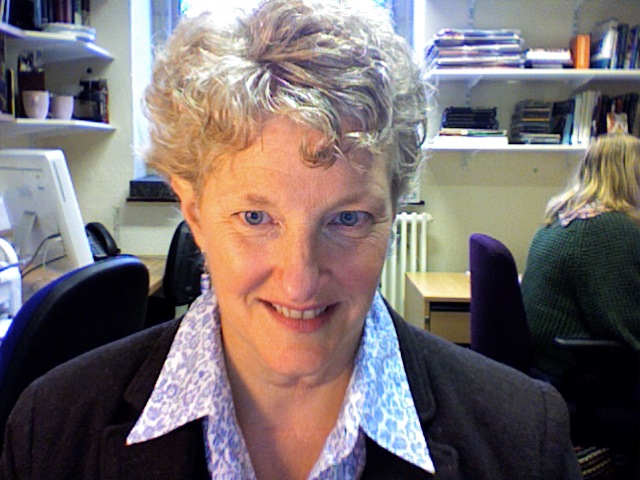
Here I am in my office at Bath Spa University, and in the background, you can just see my office mate; the performance poet Lucy English. I also share the office with poet Carrie Etter and novelist Celia Brayfield.  They’re all wonderful writers, teachers and friends…it gets quite silly in here on the infrequent days when we’re all in.

Like us, most writers also do other paid work. And like us, many writers teach as that paid work. Not all of them should. My colleagues and I put our hearts and our souls into the work we do with developing writers. We constantly try and improve our modules and our delivery. We keep in touch with students long after graduation (it’s my chief way of making new friends), and we are delighted with our students’ successes.

Even if I didn’t ‘have’ to teach, I would. I get so much from it. I’m always being made to think properly about what good writing is, issues of craft, issues of ethics and morality. I’m always discovering something new about form. I’m always learning in class…far more than my students are learning from me (though, when I tell them that, they never believe it).

But more than this, I live in a world where writing is valued. I don’t have to explain to my colleagues about my writing life. ‘How’s it going?’ we say, by the photocopier. And the answer is always about our latest writing projects. Writing is ‘it’ to us; the Alpha and the Omega – the whole of the thing of life. Some of my colleagues are being shortlisted for the highest prizes in the literary world. Some of my adjunct colleagues are just starting out; just placing stories and poems. That doesn’t matter to us that much. We all know what does matter to us that much.

The craft.

By the way, another Thursday has come and gone and I’ve still got Hospital High… I’m still making it better, you see. When I can’t do that any more, I’ll send it. That’s the craft, too…


Letting Go

When I was fourteen, I died in a car accident. That was traumatic. Three years ago, I started to write about it. That was traumatic, too. But letting go of the ms for Hospital High seems to be even more traumatic.

I’ve rewritten it for my amazing agent Sophie and have tweaked the rewrite the way she asked. There’s more sex. More clear story line. And for the last few weeks, I’ve been telling myself that on Thursday, I’ll have a final read through and send it off. But every Thursday, I do something else to it, something that needs finishing up through the week.

Sometimes, it’s hard to let go; both of the past and also of all the various potentials for a manuscript. Once it’s out to publishers, all the books it might have been die and it is now and forever only the book it was today. But of course, until I do commit to this version, it will never live, never become a book. It will only be a file on my computer…with potential.

So that’s why I’ll send it  off today. Or no, maybe next Thursday, so I can finish adding in that little plot strand. But definitely before the Thursday after that…


Beauty and the Writing Beast

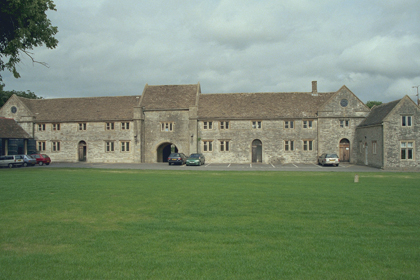
I teach here on Wednesdays.

I teach here on Tuesdays.

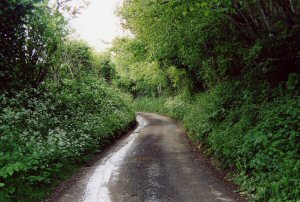
And in between, my commute looks a bit like this:

I’m a down-to-earth girl, but I do love beauty…in fact, I think I need it. When I think about the places I’ve lived and how much I’ve written while I was there, there is definitely  a correlation between how gorgeous a place was and how much good writing I did while I was in that place.  For me, that means countryside where I can observe wildlife within a short walk, and lovely drives. But for other writers that stimulation is wholly urban, and their aesthetic of what is beautiful and worthwhile to observe might not be so limited by prettiness as my own.

I also know that when the  house is a complete tip I find it difficult to write. Not because I want to jump up and clean it (I never have such an impulse), but because it jangles my writing nerves. But other writers might need to escape the suburban neatness of their homes for a shed or an office, where the disorder gets their writing nerves jangling.

Writing’s relationship with order is complex.

The first need humans satisfy; after food and drink and shelter is story. The need for narrative is so basic within us that it often comes before sex. Why are we so addicted to narrative? Well, because we don’t forget as quickly as other species, and we are very efficient at picking up stimuli. If we don’t have a way to make sense of our world, we quickly become unable to function. Narrative is our way of imposing…or perhaps revealing…order in a chaotic world. It’s not just a way of remembering things, it’s also a way of forgetting; of deciding what we will not record and notice, out of the vast amount of phenomena that comes to our brains.

I hate housework. But I hate trying to write in chaos even more. So guess what I’m going to do…right after I finish this chapter…

For more information on narrative’s function in human psychology, you might want to start here, with Lewis Mehi-Madrona’s wonderful article.

Money, Money, Money

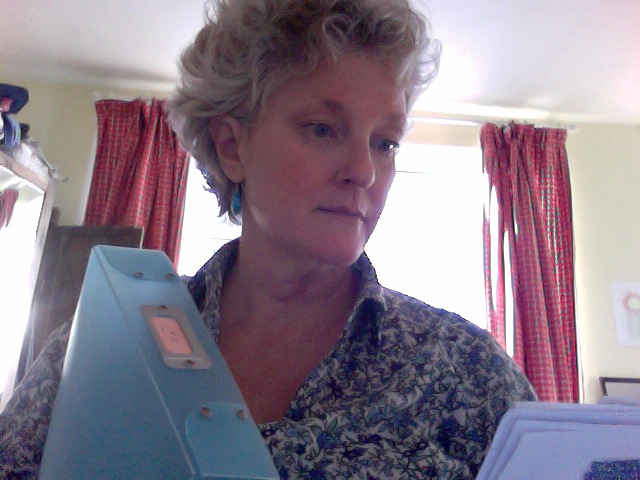
Here I am with my marvellously efficient tax system: Chuck everything into a box and sort it out later.

Well, it’s later.

Actually, I have ages until I have to do my taxes, but my accountant feels it would be best to do it as soon as possible. I’m due a refund this year – I’ll send three projects to my agent this year, but last year was a first-draft year.

That’s the way it is in the author business, feast or famine. Last year I made so much I had to sell my car and get a littler one to pay my taxes. I know I should have immediately put 20% of my authorial earnings in a savings account to allow for tax, but I’m afraid I’m not that grown up yet. I live in hope that someday I will be.

A month or so ago, I got some very healthy royalty cheques, mainly for translations and sales of Drawing Together. I immediately checked the tax date and sighed with relief to note it was past April the fifth. That’s something to worry about later, then, I thought, and put a note in my diary when to start worrying.

I quite like doing my taxes. I get to claim for all the books I’ve bought and all the movies I’ve seen. I get to claim for meals out with contacts and train tickets to London and postage. I get to claim for my writing room (and soon, my shed!). It’s lovely going through all the receipts and remembering going to see people, or remembering al the films and books, or all the groups for whom I’ve run workshops. It’s like keeping a diary.

Thank you for the cinema matinees, your Majesty. Now, if you’d just pay for the nachos and diet coke…

My Foolproof Patented Imagery Workshop

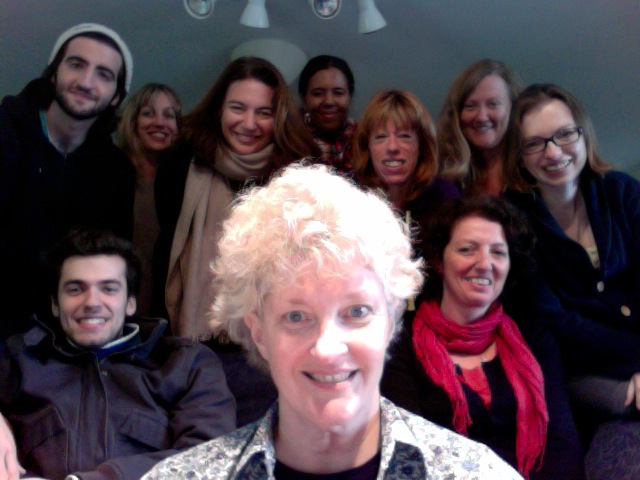
Here’s a group from the Bath Spa MA in Creative Writing and MA in Writing for Young People. We’ve just finished my imagery workshop and we’ve all had a lovely time doing it – you can see by our faces.

 I love teaching writing – to anyone.  But it’s especially fun to teach people who have been writing for a few years. And my favourite workshop of all is the FPIW, as above.

I love it when the participants discover that they can calm their minds. I love it when they are really concentrating on their senses and writing things down. I love it when they are sharing things with each other and working to make them better. And I especially love telling them, over and over, that they don’t have to try to be special when they write, that they already are special.

 If you’d like me to come and run my workshop for your group, please go here and ask.

If you can’t do that, please remember:  No one else has ever experienced the world the way you do – and no one else ever will. Get that in your writing and you’ll never look back.

I Write On Trains

Most writers do a fair amount of travelling.

 We travel to do research (I can’t write about a character until I know the place they grew up), we travel to lead workshops, we travel to see agents and publishers and we travel to promote books. Plus, we have families and friends and go on holiday like everybody else, so we travel those places, too. Which often end up being research or book promotion by accident – but that’s a whole ‘nother blog.

 When writers travel, writers write.

 Some writers get so good at writing on trains that they find it hard to write anywhere else. Trains are wonderful, anonymous places, where time is ring-fenced and phone reception limited. If you’re a writer who likes to stare at the wall while you think – you’ve got the seat back in front of you. If you’re the kind who likes to look at a view, you’ve got the window. If you like to people watch, you’ve got that, too. Can’t really go wrong with a train.

 Cars are more tricky. I feel sick if I read too much when I’m being driven, so writing is out of the question. And although I plead guilty to sometimes making notes on a pad propped against the steering wheel, writing when driving is out of the question. But in the car, I often work out plots or think about characters.

 In the car, especially during a long and well-known journey, I can tease out bits of dreams and ponder them. I can notice something I’m driving by and imagine how it got there. I can see a house and wonder what it would be like to live there.  I’m American, so I feel most like me when I’m behind the wheel of a car. I take chances with my imagination when I feel that strong.

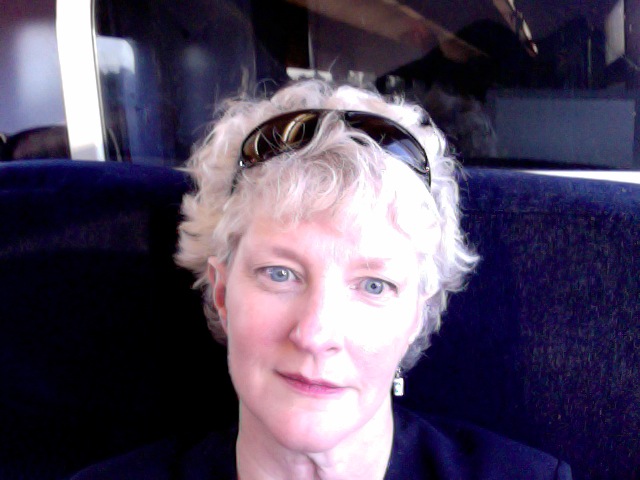
 At the end of the train journey pictured above, I was driven to the environmental centre where I would give my workshop the next day. And I saw a bright orange, big-eared fox, trotting carelessly in the headlights. It felt important, and the journey down the valley to the centre is always momentous, always carries a sense of coming back in time to a place of sustenance and nurture.

 There’s something in that. I think I’ll go for a long walk and think about it…

Seeing Sophie

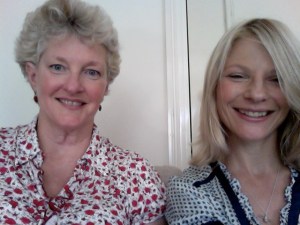
This is Sophie Gorell-Barnes, my wonderful agent from MBA. On Monday, I took the train into London just to see her and hear, face to face, her advice about the final touches to Hospital High. She’s been telling editors about it and it’s time to send it out to them.

Sophie may look sweet and lovely (and she is) but she can be tough, too. I’ve seen her in negotiations, and I’m glad she’s on my side.

 We’ve had good and bad times. Giddy times of big sales (when we sold Wipe Out, we hugged each other and silently danced around in the publisher’s loo with joy) and frustrating times when nobody likes a book we’ve slaved over (her emails were even more angry about this than my own). You have to bear with each other, and get through things, you and your agent.  It’s a bit like a marriage!

 Some types of writers don’t really need agents. They’re the ones with the business heads, the ones who read Bookseller and Publisher’s Weekly and study publisher’s lists and network with editors. They live in London, and they’re on the canapé circuit and they know who’s who and what’s what.

 I’m not that kind of a writer. I read widely in my areas, of course, and I have a feeling for what’s going on in my markets. But I need time to dream, to pretend to be a bear, to look for a long while at the colour of tree bark, to bob up and down inside a wetsuit in a cold sea. So, I walk by the river. Sophie eats the canapés and lunches and goes to the meetings.  Sophie knows who’s who and what’s what.

I write the stories, but Sophie and I work together to make them into books – and then Sophie thinks about who will want to publish them…she will have been thinking about that even while we do the work of making them into books together.

 I trust Sophie. And I’d find it very hard to do without her.

Mornings…and All the People I Am

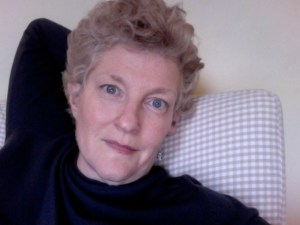
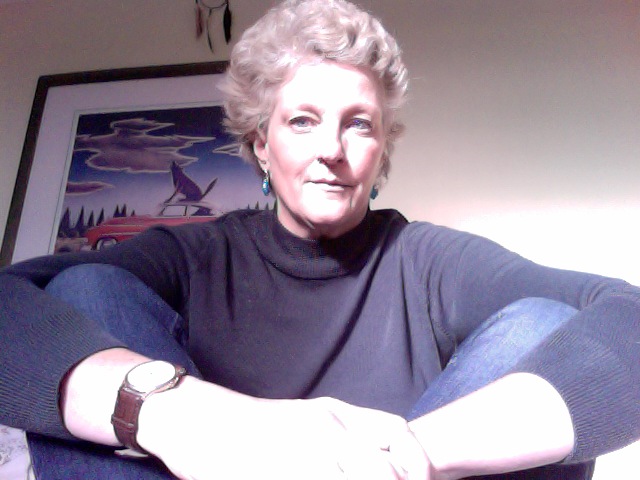
This is me, dressed in my writing clothes. You’re lucky – sometimes I don’t even wear the dressing gown.

My favourite place to write is bed, and my favourite time to write is early in the morning, while the rest of the world sleeps. I wrote  a poem about this once, which I’d share with you now, except my mate Carrie Etter wants me to try and publish it in a proper poetry magazine. I need to send it to her…

I need to do lots of things. I need to finish my handbooks and weekly plans for my students, so that they don’t feel so apprehensive in starting a new year. I need to go into a meeting with my boss, to talk to the Bath Literature Festival people about how we can help provide fringe events with our students. I need to pick up my daughter and take her to tap class this afternoon. We were up late last night at an Open Evening – she’s nine and we’re looking at schools this year to discuss over this summer. So, I slept late and missed my writing time this morning.

‘Never give up your writing time,’ another poet mate, Tim Liardet, hissed at me yesterday when we were presenting modules to the second and third year students. ‘Never. Never. Never.’ I hissed back, ‘That’s such a male thing to say.’

I wouldn’t have said that ten years ago. Ten years ago, it would be me saying, ‘Never give up your writing time. Never. Never. Never.’ But, back then, I was the most important person in my life. Soon, perhaps too soon, I will be again. My daughter thinks she’d like to go to a boarding school when she turns eleven.  But right now, I’m not.

So, when I can wake up early, I write. And when I can’t…one memory of her, curvetting in her ballet leotard, so graceful and beautiful and confident of my love…and my bitterness blazes away in a flame of passionate motherhood.

I think I’ll be a better writer for that.