‘It’s Dogged As Does It’

‘Tell ‘ee what, Master Crawley;–and yer reverence mustn’t think as I means to be preaching; there ain’t nowt a man can’t bear if he’ll only be dogged. You to whome, Master Crawley, and think o’ that, and maybe it’ll do ye a good yet. It’s dogged as does it. It ain’t thinking about it.’ Then Giles Hoggett withdrew his hand from the clergyman’s, and walked away towards his home at Hoggle End. Mr Crawley also turned away homewards, and as he made his way through the lanes, he repeated to himself Giles Hoggett’s words. ‘It’s dogged as does it. It’s not thinking about it.’

Photo on 2013-08-16 at 16.17


Anthony Trollope could swing a pen. I’ve re-read his Barsetshire series at least five times in my life and this exchange, between a beleaguered, principled cleric and a farm hand has stayed with me for 36 years.

For a month, I’ve been insisting on a regular writing time. as if I didn’t have a job, a child, a house to renovate, another house to clear and sell, a dog, a cat, fish, money worries and parish responsibilities.  Just as I did when I first became a published author.

To be honest, I thought I might not be able to write any more. I’d had such a disappointment with how my last publishing deal worked out…and some slights at work that were probably nothing, but that I magnified and dwelt upon… And then I tried to write something enormously difficult and complicated and…well…I failed. I couldn’t find the right voice for it.

When my memoir (about dying in a car wreck as a teenager and my subsequent recovery) wasn’t being accepted easily, I wondered, sometimes, if it would be a good idea to stop trying to write.

Then I was asked to fictionalise the memoir and then I had a rather tight deadline and started to work daily and…I found out that I can still write. Rather well, I think. I just turned the first 30K into my agent today. We’ll see what she thinks.

But that’s not the reason I’m writing this blog. The reason I’m writing this blog is that today, just walking the dog, I suddenly had an idea for what I need to do to my enormously difficult and complicated novel. I suddenly saw how the voice needed to work. I’m not ready to write it yet, but it’s starting to work for me.

It wasn’t thinking about it that got me there. It was writing, the actual practice of writing.

Hoggett, as I’ve found many times over the years, was absolutely right. It’s not thinking about it. It’s dogged as does it.

The Work

Photo on 2013-08-02 at 12.10 #2

From time to time in this blog, I’ve talked about how laying-in-bed-reading-novels is part of my work. I’ve talked about how going-to-the-cinema is my work. I’ve talked about how standing-in-the-middle-of-a-river-and-watching-waterbugs is my work.

But so is the writing bit. And when I’m working on something, the writing bit keeps on going. Our friends who are vacationing/on holiday in the same place are also self-employed. They run a B&B. They get a locum manager in for three weeks, so that they can have a break. My husband is not selling wine (though he’s certainly researching a fair few bottles). Out of everyone we know at our holiday spot, I’m the only one still working every day. I always do.

My work is fun, but it never really stops.

So, since we are staying in a little beach chalet (me, Daughter, Husband, Elderly Mother, Dog and Daughter’s Best Mate) I’ve been writing at a local fast food establishment. Every morning, I drink three or four Diet Cokes and type away. It’s busy enough that, like a train, the noise is generalised and not particular, so it’s easy to drown out with my thoughts. I’m not distracted by any beauty (terrible for me…give me a nice view and I can look at it for hours with much detriment to the word count). It’s not expensive. The staff have been really kind and supportive.

The first day, I tried to find someplace lovely in the local medieval village, but the parking takes so long and is so unreliable that I’d spend all my time doing that and no time writing.

So, I’ve been here, with the smell of the fryer and the shouting kids, writing what seem to be 1000 or more very good words every day.  it’s not terribly glamorous, but it is literary. And it is, actually, work.

The Fear

Image


It doesn’t take a long time to write. I’m writing at least 1000 words a day right now, and can often do quite good work in just a couple of hours. 

No, it doesn’t take ages to write. But God, it takes a lot of courage. 

Whatever you write will reveal everything about you; about your ethics, about your class, about your prejudices, about your education. 

And even more terrifying is that it will also reveal how well you can write

This is The Fear. The Fear is what takes the time away from writers. We read other people obsessively, because we love writing, yes, but also because we are always asking, ‘is s/he better than me”? The Fear makes us go to our computer and play on Moshi Monsters during our precious, carefully guarded writing time. The Fear can stop us from writing altogether, for days, weeks, months, years…even a lifetime. 

And don’t think you’ll escape it. No matter how stupid you are, how ill-informed and instinctive of a writer you have managed to allow yourself to remain, you will still contract The Fear at some point. And the better you are; the better read, the more celebrated, the more published and reviewed, the more likely you are to get it. 

I was at a weekend retreat with a very well-known novelist (as I’ve said before, sometimes I really do have a glamourous literary life). The novelist said that they (I’m not going to reveal gender) were terrified at that point in their writing career. They had this horrible thought that they might not be ‘any good’. 

I laughed, and said that I’d heard Salman Rushdie say the same thing on Radio Four on my way to the retreat. I said,  to this celebrated and award-winning novelist, ”I don’t think that worry ever really goes away. Don’t let it get to you. If Rushdie feels that way…’ 

The novelist clutched my arm. ‘But, Mimi,’ they said. ‘Rushie’s right. He really isn’t any good!’ Shaking, the novelist went off and poured themselves a hefty glass of wine, the neck of the bottle rattling against the glass. I was laughing too hard to help.

And I couldn’t have helped anyway. The Fear is something we have to face by ourselves. 

I’d been dealing with it for weeks recently, when I heard something that helped me out of it. I was at Mass at my Catholic church when the priest had us pray that we all used our talents, whatever they were, as well as we could, for the glory of God and the help of us all. 

The next day, I wrote 2000 words. Is it any good? It’s the best I can do. I hope it’s good. But I’ll never really know – unless my religion is right and we will retain our consciousness after death. If we do, there’s a whole bunch of failed farmers, ignored spinsters, suicidal young wives, and a certain local government official (who had a wild young life in the theatre) up in whatever ‘Heaven’ might be, laughing their celestial heads off. 

For the glory of God, the help of us all or for another cause…we have to sit down and get naked. We can’t let The Fear stop us. We can’t let it win, even if we, in the end, don’t win, either. 


Other People

Image


Yesterday, my daughter felt ill and stayed home. ‘I’ll need to write,’ I said. ‘I’ll sleep late,’ she promised. At 7:45 am she arrived downstairs, despondent and wanting my company. That was my writing over for the day – we ended up going junk shopping and getting things to finish off her new room. Last night, I went out to dinner with some colleagues. It was absolutely lovely, but I didn’t get an early start this morning. At lunctime, I’m off to see Robbie Williams at Wembley, with my dear mate, who loves Robbie’s songs. My husband won the tickets at work. If I get an hour in on the ms. today, I’ll be lucky, and I can’t carry my laptop into Wembley (to get good seats, we’re going there straight off the train), so I won’t be writing tomorrow morning, either.

Other people are hell in a writer’s life. But what can you do? Being interested in people, being curious about them, is often what gets you writing fiction in the first place. And people who wrote really amazing characters – your Mark Twains and Jane Austens and Charles Dickenses – were intensely social people. They wrote so well about people because they knew them.

I know lots of writers, so I know lots of different kinds of people who write. Some are the kind of writer I grew up thinking I would be; aloof, self-sufficient, rather austere. One has a very bright, brittle intellect. She writes very bright, brittle novels where everyone is either bright and brittle or very stupid and socially clumsy. (I’m sure if I were one of her characters, I would fall into the latter group.) I think this often happens to the austere ones…they end up writing everyone as themselves, because that’s the only person they really know. 

Sometimes (though of course not in a writers know) characterisation is very thin. Men who don’t think about sex and women who have no demands on their time from friends and family, people who only think about work when they’re at work, people who have no wishes or dreads, whole populations of people who are prepared to listen to long speeches from the main character…

It’s a lot easier to write that way. You get your plot. You get your main character. And you move the latter through the former. Job done. But it’s not good fiction and it’s not a believable world. 

People always have their own hopes and dreams. People always want something and are trying to get it. People have complex lives and motivations. Even the security guard who is taping the crime scene at the mini-mart is thinking about something. When the police officer arrives, and says, ‘We’ll take over, now. You’ll be wanted for interview,’ he can reply, ‘Yes, Ma’am.’ Or he can reply,  ‘At least somebody wants me,’ or, ‘Can I go pick up my daughter first?’ or, ‘I knew it. I’ll never get to go on my fishing trip,’ and become a real person. The police office can then react, deepening the characterisation of the protagonist as well. ‘You’ll need to call someone else to get her, I’m afraid,’ she can say. Or she can give the security guard a long look and just say, ‘Wait over there.’ It doesn’t take up much space or slow down the pace, but it enriches the story by making the world deeper and more real. 

Which is exactly what my daughter, my husband, my colleagues and my mates do for me. I can’t write a real world without living in it…living in it with real live people with their own hopes and dreams…some of which include me. But then again, if I never have time to write about it all…

I’m going back to work, now.  

Being Nice

Photo on 2013-06-27 at 10.45


I worked with Fay Weldon on Monday (sometimes, I really do have a glamorous literary life). As usual, La Weldon said a lot of interesting things. But one of the most interesting, for me, anyway, was, ‘A lot of women writers are held back by wanting to be nice in their fiction, because they want to be good girls and please everyone.’

Just like many young women don’t think that there’s any need for feminism anymore, many new female writers think that their fiction will be a gender-free zone, where their womanliness has no impact on how they are read. Of course, both are sadly mistaken. There is still a 10% gender pay gap in the UK, women pensioners are, according to the government, ‘significantly more impoverished’ than male pensioners. 1 in 10 men will be treated for mental illness and it’s 1 in 4 women… And, despite Hilary Mantel’s recent successes, the vast majority of literary prize winners, grant awardees, Visiting Professors, etc, etc, etc are men, even though, on any given post-graduate course in Creative Writing, women predominate.

‘Girls will read about boys,’ my first children’s editor told me. ‘But boys won’t read about girls.’ I thought boys grew out of that, but an editor interested in the book that became The Saint Who Loved Me thought differently. ‘No man is going to read this,’ she told me sternly. ‘It’s got things about tampons in it.’

I hadn’t realised that. I hadn’t realised that because I wrote about a woman’s experience of the world, and wrote about marital problems, spirituality and life choices from a woman’s perspective, I was alienating 48% of my potential readers from the get-go. Male readers very much liked Welcome to Eudora from the various reviews and letters I got from them. How they got their hands on it remains a mystery, though…it was often shelved under ‘Romance’.

If you happen to, or make up your mind to, write in accepted literary models and if you write, in a way, specifically for men, you don’t seem to be ghettoised. But if you are a female writing primarily for women, you can pretty much forget being taken seriously by the literary establishment. Even today.

How much of that problem is about the writers being too ‘nice’ in their fiction and how much is about marketing, cover design and titling (the working title for The Saint Who Loved Me was  St Rock) still remains a mystery.

But I know one thing – nobody is going to take my books seriously if I don’t. If I don’t stop being nice and wanting to please everybody.

I’m writing in the café today, because my new cleaner is in my house and my shed is still on order. While I was madly typing away (the tea here is strong enough to be a Class A drug), an acquaintance approached, smiling.

‘May I join you?’ she asked.

‘Sorry,’ I said. ‘I’d rather you didn’t. I’m working.’

She raised her eyebrows and looked hurt as she turned away. I fought the instinct to run after her…to abandon my manuscript and explain. But I didn’t.

It’s a start.

Getting A Little Organised

Image

My daughter found her squirrel pencil case and didn’t need her pink one anymore. ‘Here,’ she said. ‘You need one.’

This was news to me, but she’s still young enough to humour. I shook out my bag and put all my pens and pencils into the pencil case.

A week later, I read an article about stationary by Lucy Mangnan (who is nutty about stationary – I was part of a Radio Four programme she did about it). It talked about pencil cases and what women keep in theirs. Phone charge cords featured heavily.

I’m always losing my phone charge cord and not getting important calls. I started keeping my phone cord in my pink pencil case.

The pink pencil case is made out of oilcloth and patterned with butterflies. It has a little Velcro-shut pocket on the side. On my recent tour of externalling, I kept my receipts in there. It is the first time, ever, that I haven’t lost some of my receipts on a business trip.

My daughter was right – I did need a pencil case. I just didn’t know it.

I can’ t get too organised. I can’ t schedule every hour of every day. I need time to be able to say, ‘Hey, that’s a nice flower. I wonder what it would be like to be a bee and go inside. I know, I’ll stop my bike and use my lipstick mirror and get really, really close to the flower and write a little bit in my notebook about how furry and comfy it all looks in there.’ I need time to lie on my bed and worry that everyone writes better than I do. I need time to lie on the sofa and read and time to drive like a lunatic to the cinema so that I can watch a film I just read about on Twitter that starts in two minutes.

But I also need time to write and a place to go to do that. I’ve blamed work, my family, even the dog sometimes for not getting time to write. But, really, I just need to get a little more organised.

Just a little, mind…

Writer on a Train: You Can’t Do Everything 2

Image

I’ve always done too much. I died when I was 14 and, since then, I’ve tried to cram as much as I can into every day. I go for weeks, months, not getting enough sleep and then collapse into illness that goes to my throat and lungs. Every time I get an illness in my throat and lungs, I think it might be the one that will eventually carry me off. And so, once I’m well, I throw myself back into life with the same urgency.

 That’s why I have not one, but four books on the go. It’s why I have several research interests. It’s why I grew my own vegetables, baked my own bread, have a dog and a cat, became a school governor and a children’s liturgist, external at three universities, etc, etc, etc.

But there are a lot of things I don’t do. I don’t go out much at night. Most writers either don’t go out much at night or don’t get up in the mornings. (There is no earthly use in scheduling a poetry class at nine a.m.)

I don’t do birthday and anniversaries, except for my very, very closest friends and family. I don’t iron. I don’t have beige carpets (in fact, I don’t have carpets at all – I have wooden floors). I don’t follow fashion. I don’t go shopping much. I don’t go to fairs or festivals (except literary ones when I’m working for the university or for myself).

Two writing friends recently admitted that they don’t even dust. I’m not quite that bad, yet.

I don’t watch television series. I don’t keep my nails painted. My skin care regime is skimpy and faulty and, when I’m working, I don’t even know what I’ve eaten…I just see the pile of plates when I’m done. I also don’t get to the hairdresser often enough – something regular readers of this blog will have noted.

I don’t see my friends as often as I should. I don’t write or Skype my cousins as often as I’d like. I don’t go to morning Mass, even though I theoretically could and actually would like to. I don’t pick my daughter up from school. I don’t take her, either. I don’t schedule her into a variety of activities (she has two dance classes a week). I don’t arrange a lot of playdates and sleepovers for her and I often forget when she’s due to do something special at school. I am the parent who is always late in with her permission slip and fee for the field trip.

Because I am writing a lot and reading a lot and I can’t do everything.

Writing is part of every aspect of my life. From the time my alarm goes off and whether or not I can walk the dog to if I can have another glass of wine and how much fervour I put into my goodnight kiss. To do this thing – which includes so many false starts and reworkings and blind alleys it’s an absolutely ridiculous eater of time – it has to be my life’s priority. To remain in a relationship with me requires patience and fortitude I myself do not possess. I am absurdly grateful for how much love there is in my life.

Those who love me, who truly love me, leave me alone to get on with it.

I wish I could show them how much I appreciate it. But you can’t do everything. 

Writer on a Train: You Can’t Do Everything 1

Image


I was at a party.

That, in itself, makes the whole thing unusual. I write best early in the morning. That means I’m generally in bed by nine-thirty, tucked up with a glass of wine, Husband and a book. 

It was a literary gathering, so it was something to do with my day job – I’m a lecturer on Bath Spa University’s highly successful Creative Writing courses. Anyway, at this party, a commissioning editor from Walker books spoke to me about what she really wanted. She wanted, she said, a stand alone fiction book, a real, old fashioned story for 8-11s, with a little bit of magic.

Now, if I was another kind of person, I would have remembered her name. I would have come up with a killer idea and pitched it to her within a fortnight.

Unfortunately, I’m not that kind of a person. I’m the kind of person who forgets all about it until a year later when she finds herself writing…an 8-11 narrative with just a little bit of magic in it. That’s why I have Sophie, my gorgeous and clever agent. She’s good at remembering things like that. I’m good at imagining clumsy school caretakers.

Sophie is her own person, she’s not me doing a different job.  She doesn’t do exactly what I want. But then, I’m sure I don’t write exactly how she’d like. We have enough in common to understand each other, and that’s the important thing. And we quite like each other, and that’s even more important. It’s a long relationship, a bit like a marriage. You will mess up and so will your agent. You have to be able to forgive each other and get on with the job. That takes goodwill and good communication.

At some point, editors also come into the equation. I know how important a good editor is to me and my writing, because I’ve had bad editors. Twice, I went with a certain publisher so I could work with a certain editor, only to have that editor leave the employment of that publisher (they hop around like bunnies). Now, I am wary. I will only do a one-book deal. We’ll see how we get on and take it from there.

The fact is, writers need help. We can’t do it all. Yes, it’s a good idea to have some concept about what’s going on in the publishing world of your chosen genre. Yes, it doesn’t hurt to get out every once in a while to prove that you can, indeed, talk to people sensibly. Publishers want to know you could be taken to fairs and festivals without disgracing the entire imprint. But writers usually can’t keep up with everything that’s published or who is now working where or why so and so’s book didn’t get into Asda. We can’t talk to Waterstones about how brilliant own book is or… well, it never ends… We can’t do everything.

Even most of the great ebook successes have been due to teamwork.  At some point, if you want to write, you’ll have to work with other people.  In films, you just sit in a room and then are discovered and immediately become a best seller and a millionaire…but it doesn’t really work that way in the real world. In the real world, you have to negotiate what you want from your book with what your agent wants from your book and your editor wants from your book and their sales and marketing team wants from your book. And when you are in the middle of all that, trust me – you’ll have enough to do without reading Bookseller or Publishing Weekly cover to cover. If you can blog, tweet and remember what you were trying to write, all at the same time, you’ll be doing better than most of us.  

The fact is, any time you spend trying to read the market so you can do without your agent, trying to second guess or supplement your publicity department with some grand, splashy scheme…that’s time you are not writing. And the writing bit is what only you can do. The writing bit is the whole point of you being in the business.

Heck, if I just read all the ‘how to market your book’ blogs that were tweeted at me last week, I wouldn’t have any time to write at all. And anyway, the bestsellers and prizewinners I know don’t do any of that stuff. They just write really good books and people do the rest for them.

My job is to tell stories. Although maybe, just to help Sophie a little bit, I’ll go onto the Walker website and stare at editors’ pictures for a while. She had a nice handbag…I remember that…and shiny hair…

It was hot and loud and my glass was warm in my hand. Someone next to me wore too much Chanel no5. There was a lot of that kind of trying too hard, the desperate energy of people looking for money and fame. Then the door opened and, for a moment, you could smell the rain.  She looked at me and I could tell she wanted to go out in the cool air. She looked for somewhere to put down her empty glass, and I took it for her. She smiled back over her shoulder and ducked under someone’s arm to get outside…

I’m sure her name will come to me. Eventually.


Writer On A Train: Being a ‘Real’ Writer

Image

I went to a posh girls’ school last month, with a team from my university’s outreach programme. I put a bit of effort into how I dressed, trying to fit in. But when I arrived, the receptionist looked me up and down and then said, ‘Oh, you must be the writer.’

It made me wonder. Was it just because my clothes weren’t crisply ironed? Was it that my hair had blown about a bit in the wind and got too curly? Was my lipstick too bright? Or did I actually look…in some way…arty? Writery? 

Today is my day off from my mammoth train journey. I’m at my in-laws’ house. I’ve written here quite a lot over the last 30 years, but now that they’ve both died, I’m finding it hard. 

Not being able to stop noticing things is what made me start writing to begin with, but it’s getting in the way today. It’s not like I can turn it off, though. It’s not like I can’t see that the bird feeder still has the cup for toast crumbs that my father-in-law went out in the snow to provide. It must have made him gasp for air…he was dying, even then, though we didn’t know it. I can’t keep myself from imagining him reaching, bracing himself on his stick, flopping down breathless and satisfied on the sofa when he was done. I can see just how his face would have looked. 

Not only can I not stop noticing things, I also can’t always stop imagining things.

My imagination has been strengthened by my writing practice.  I may not want to think about my mother-in-law, but every time I see the copper jelly moulds on the wall, I can see her standing back and regarding them with satisfaction. I can hear her say, in my mind, ‘I think that looks effective.’ And it breaks my heart. 

It’s my dreams, too. Since I started writing seriously, my dreams are no longer random silly images and vignettes. My dreams are well-structured and very three-dimensional. Sometimes they carry on from each other over several weeks, expanding into a huge coherent narrative. They’ve very convincing. The one about the rather large kitten I brought home that turned out to be a tigress was particularly disturbing. In it, my poor family kept trying to tell me that we were in danger from the rapidly growing cat…

There’s this concept that artists are driven to create – that ‘real’ writers ‘have’ to write. I’m not so sure about that. However, I do think, as in my previous post, we choose. And I also think that once we’ve chosen, there’s really no going back. 

In adolescence, humans begin to make huge, largely unconscious decisions that will affect the rest of their lives. We chose what is most valuable to us from our own brain structure. The brain, which has up to that point overdeveloped its synaptic functions, then begins to prune itself. This process lasts, according to a recent article in The New Scientist, well into our late 20s, but is largely irreversible. 

I think this is the basis for all of our Romantic assumptions about ‘genius’, or our ideas about some people ‘having’ to write (or paint or whatever). Once you develop your brain in a certain direction, to do certain things, it’s very difficult not to do those things. Part of your pleasure in life, and your comfort with your own existence, is to utilise those carefully constructed synaptic patterns. 

It reminds me of when, shortly after I ended my well-paid career to write seriously, the bank took away my Gold Visa card. I was on hold while the lady in the bank’s call centre looked up the procedure for me to return the card. Thinking I was inaudible, I sighed and said to myself, ‘Why did I ever want to be a writer in the first place?’ The lady answered. She said, ‘Well, dear, I suppose you always felt a bit special.’

We aren’t, of course, special. But we are a bit different, in the same kind of way. I imagine if you put two chess strategists in a room with a hundred other people, they would find each other…or two linguists…or two dancers…or two farmers. I can certainly find writers. Even when I’m on a panel of media practitioners or at a slimming club or a church barbecue or at my daughter’s school, I find I’ve made new friends with…yet another writer. It’s gotten so that when I meet someone at a wedding or a pub and we chat for more than five minutes, I just go ahead and ask, ‘So, what kinds of things do you write?’ And they answer. They say, ‘Poetry,’ or ‘Fan fiction.’ Before I even know their names

When I was young, I thought that real writers lived in Paris. They were solitary, like polar bears. Or they had country houses and big shining walnut desks. They were nearly always men, or slim, unattainable women. They never had children needing to be picked up and taken to tap dancing class. They never had jobs, or worries about the damp in the extension. 

Every since my first publishing deal, I’ve been trying to find this ‘real’ writer in the mirror. I never could. I found her in other people’s eyes, instead, because of my rumpled clothes and my untidy hair. But really, I found her inside me, long ago. And I loved her so much that when the time came to prune her away, I couldn’t do it. 

And that, as the poet said, has made all the difference. 
 

Writer on a Train: The Choice We Made

Image

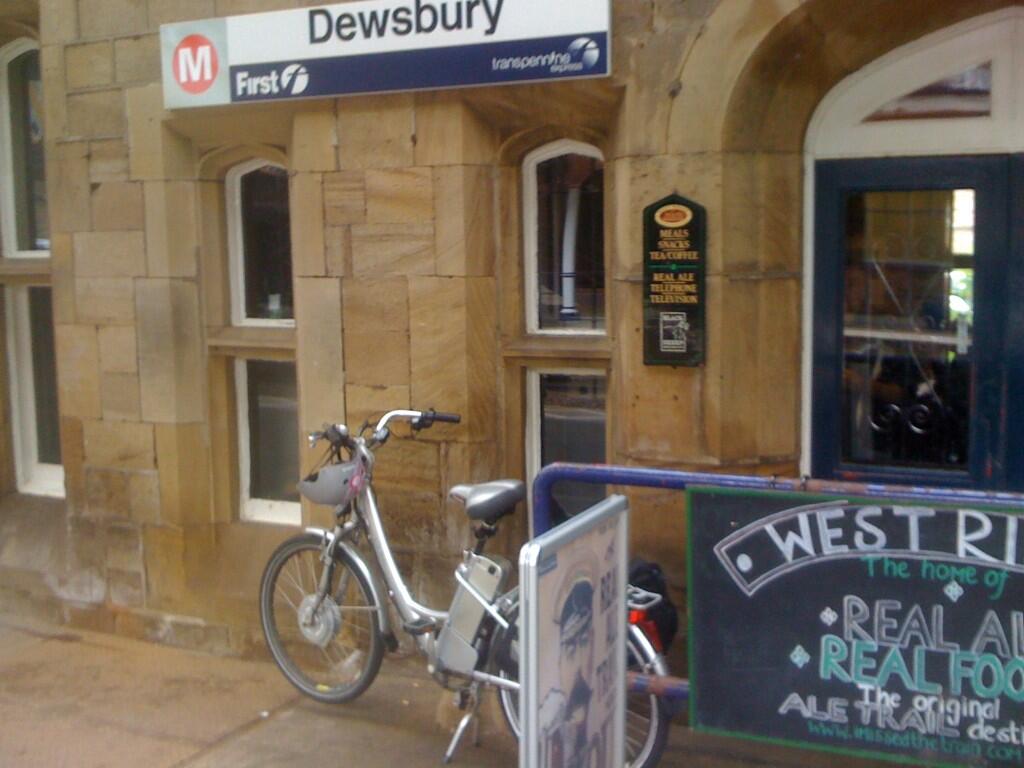
Today’s journey is from the University of Derby to my in-laws house in Yorkshire. Today, my bike is a pain. I have twisted my knee, kneeling on the bed yesterday and rotating the poor thing in a way nobody over 40 should attempt. My bike wouldn’t fit on the lift at the uni, which meant I had to lug saddle, helmet, battery and panniers up to the third floor. When I was finally ready to ride back to the station, it started to rain. You know, that kind of experience.

 But I have an anorak I actually like wearing and the brick of the pedestrianised centre of Derby makes a very nice sound under my wheels and I got to ride through a park and past some lovely medieval buildings and a really beautiful old wisteria vine… for a moment I felt sorry for people who were trapped in their cars.

 Then it rained a bit harder. And then it started to hail. Hail pinged off my helmet. Water dripped off my nose. My legs started getting wet. And I started to seriously feel sorry for myself. ‘Look,’ I thought miserably, ‘at all those people on foot who can just nip into a shop. I can’t nip into a shop…I have this big, stupid bike.’

 I forgot, you see. I forgot that I chose to ride my bike on this round of external examining. 

 My husband wants to buy the house down the street. So did I, before I figured what it would mean to the family finances. Now, I’m not so sure. He wants to have a house as nice as his colleagues have. He forgets that we spent our twenties – and a bit of our thirties – travelling the world and working itinerant short-term jobs. We chose not to work at jobs we didn’t like after university.

 And it’s the same with the writing life. Nobody told us that writing fiction would be easy.

Nobody said to us in high school, ‘This is a great career. You’ll be treated beautifully in this industry and have security and happiness to spare.’ Nobody said, ‘Writing fiction is great for your ego,’ or, ‘Everyone I know who writes fiction has a great standard of living.’

 We chose to become writers because, when we were young, it seemed like the most wonderful life of all. It still is…if you don’t feel sorry for yourself.